

What do we need to believe for orbital compute to be viable?
Cost, Time To Power, Performance
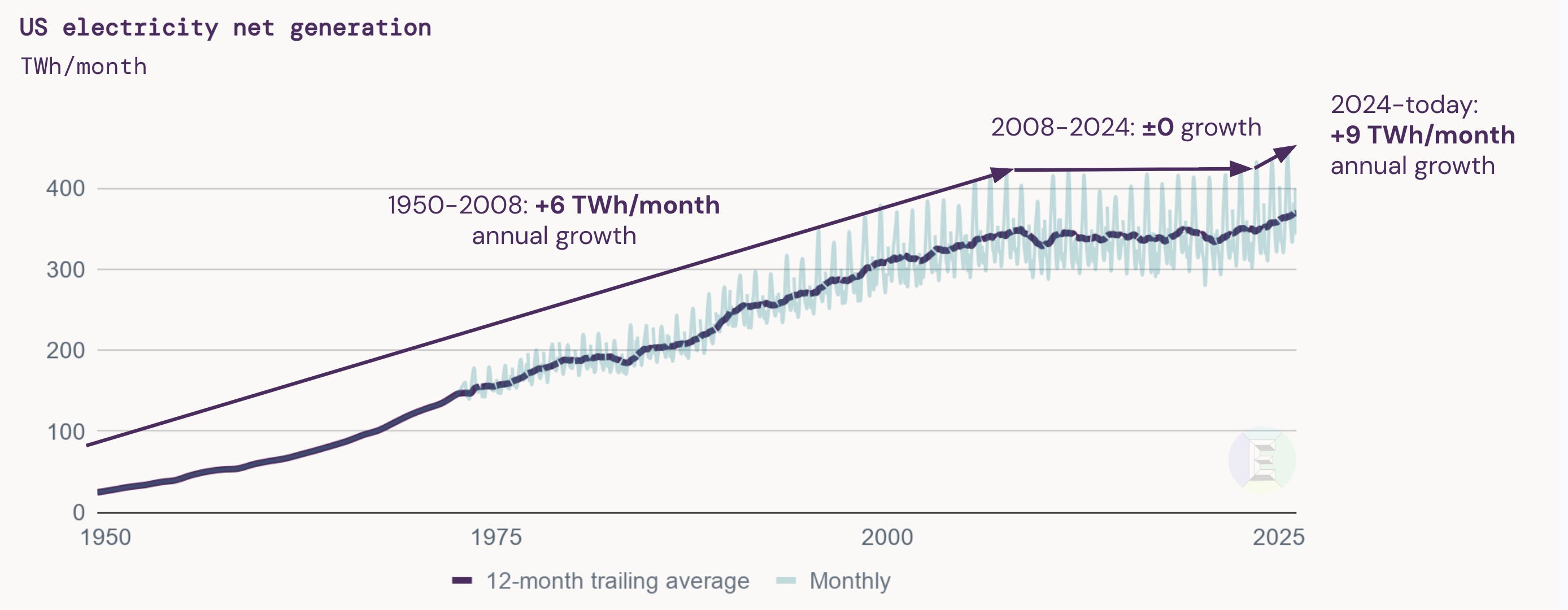
The grid was built for 1-2% annual demand growth.
AI is a supercycle that the grid can’t handle.
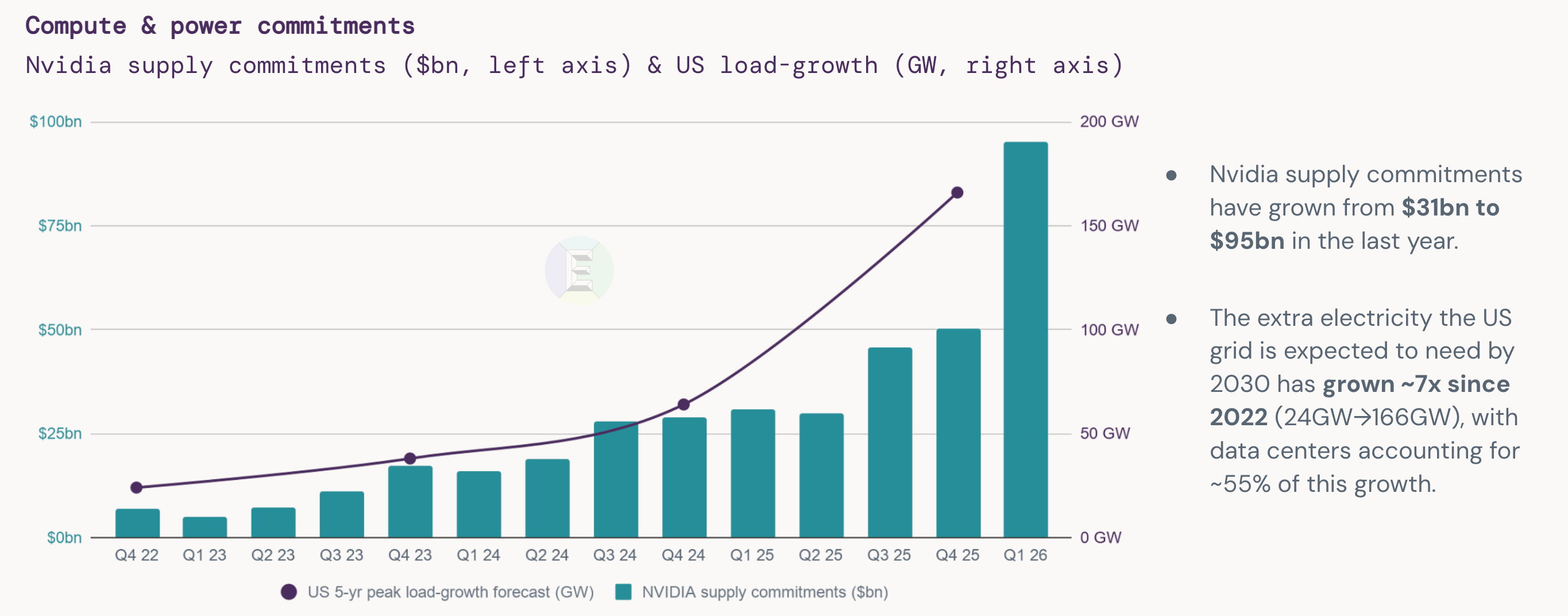
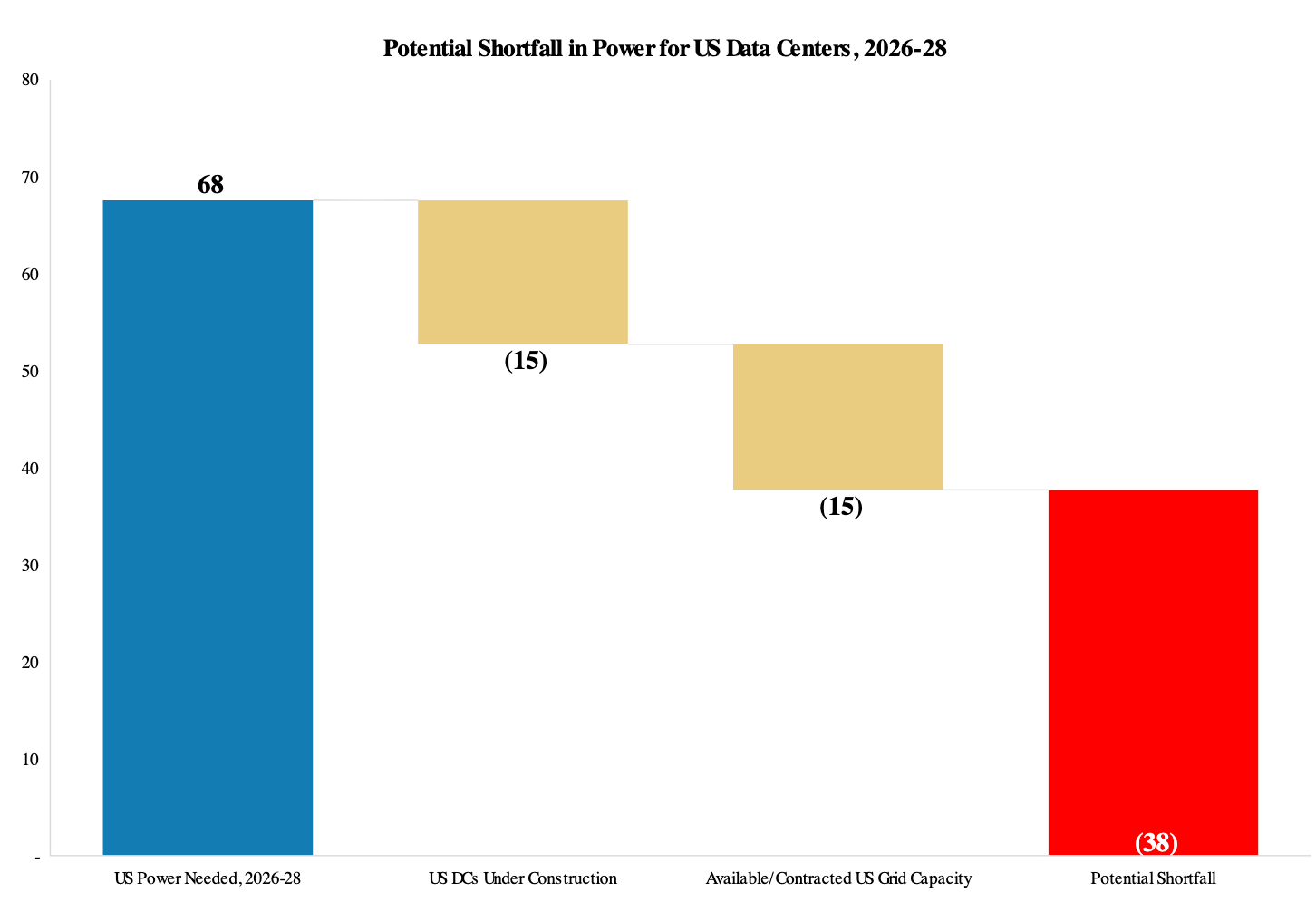
There could be a 38 GW power shortfall between 2026 and 2028 for data centers.
An estimated~$156 billion of projects were cancelled or delayed in 2025, and $130 billion have already been cancelled or delayed in 1Q26.
Reasons range from supply chain shortages and long lead times on electrical equipment to political pushback.
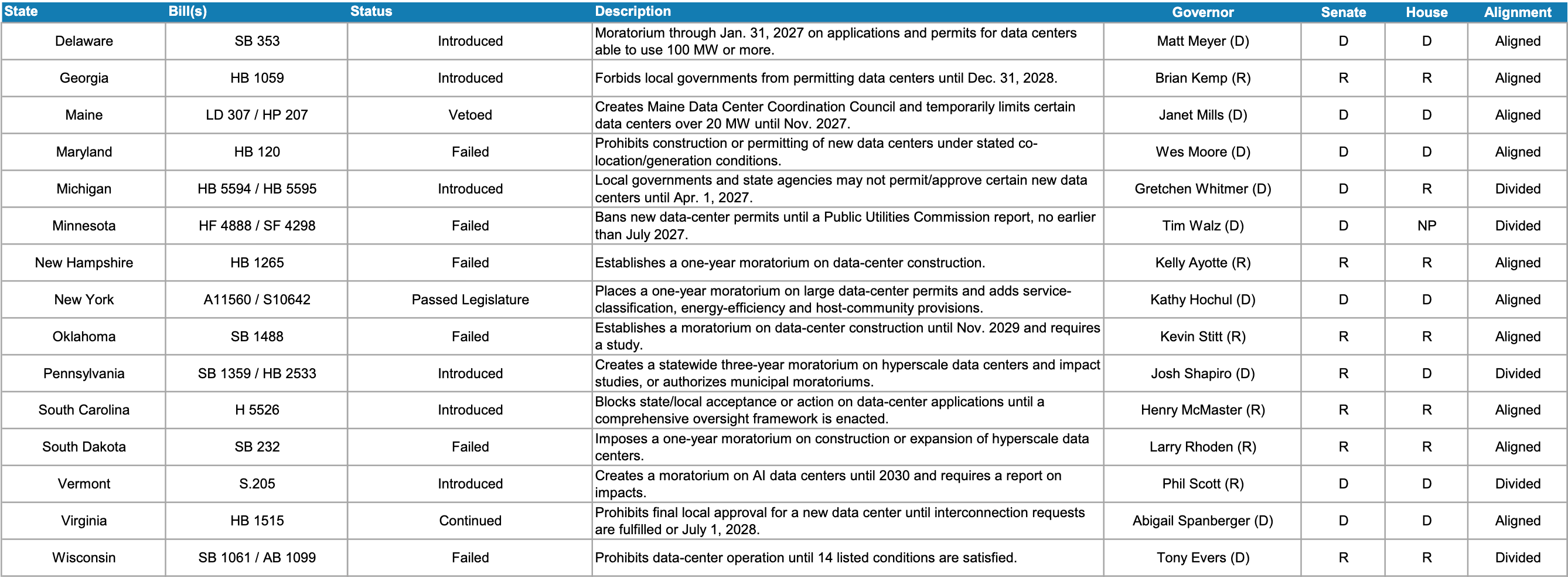
Since I started writing this post, New York became the first US state to impose a one-year ban on data center development. Kevin Xu has been tracking data center moratoriums across the US: 40 states have already been affected.
There’s a real risk that the AI buildout will not be able to keep up with demand driven by agentic inference, particularly in Western economies that are not able to rearrange atoms as fast as bits (i.e. energy, manufacturing): Agentic Reasoning tasks can consume ~50 Wh vs. ~0.3 Wh for chat.
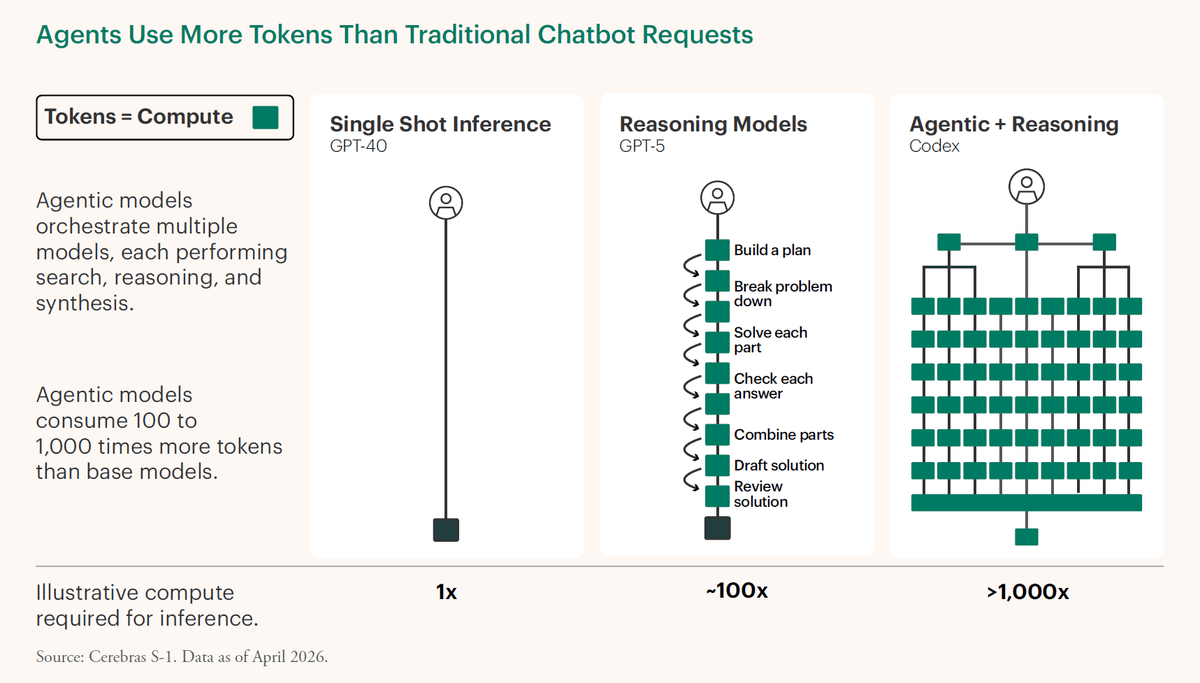
For the better part of two decades, the dominant assumption in technology was that software scaled infinitely while the physical world slowly faded into the background.
AI is reversing that logic.
The next phase of the technology cycle will not simply be determined by better models or smarter algorithms, but by access to scarce physical resources: Chips, memory, electricity, land, cooling, and industrial infrastructure. In other words, the AI race is no longer just a software race. It is an industrial-scale, infrastructure race.
When Huang says “iso power” he means that power is the constraint; the question is how many tokens can you generate given a fixed power envelope, and Blackwell can generate a lot more.
China — which actually builds power generation — is not iso power; they are iso compute: Huawei’s goal with the CloudMatrix 384 is to get as much compute as possible, power efficiency be damned.
Ben Thompson
The west has to pursue orbital compute - OpenAI and Anthropic alone will consume 100 GW by 2030. Not just because it might be cheaper one day, but because it may deliver faster time-to-power.
But the economic argument will get stronger over time.
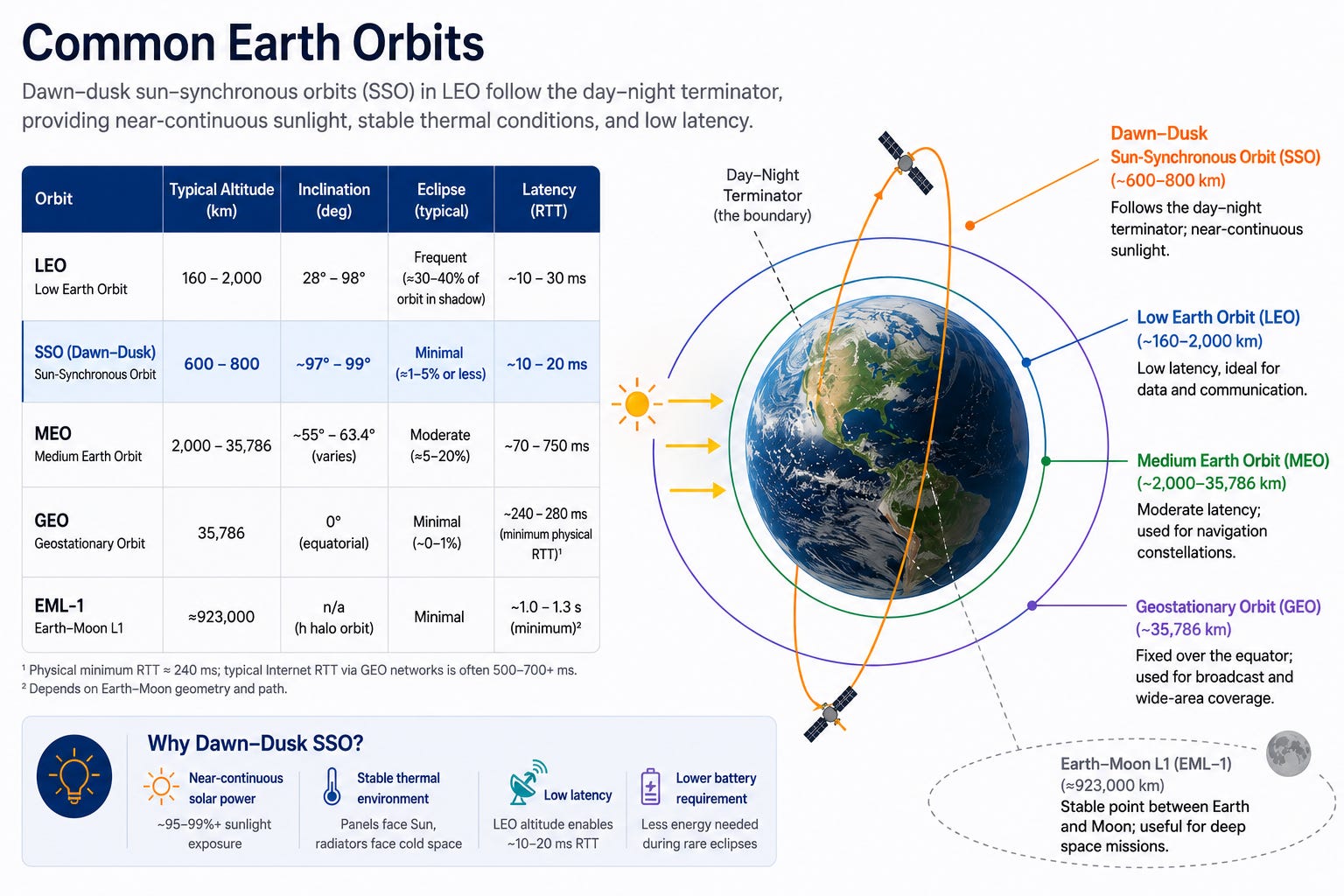
What does orbital compute represent? Racks in space, satellite-sized, at dawn-dusk sun-synchronous orbit (panels always lit, radiator always shaded); racks linked by lasers into a virtual data center.
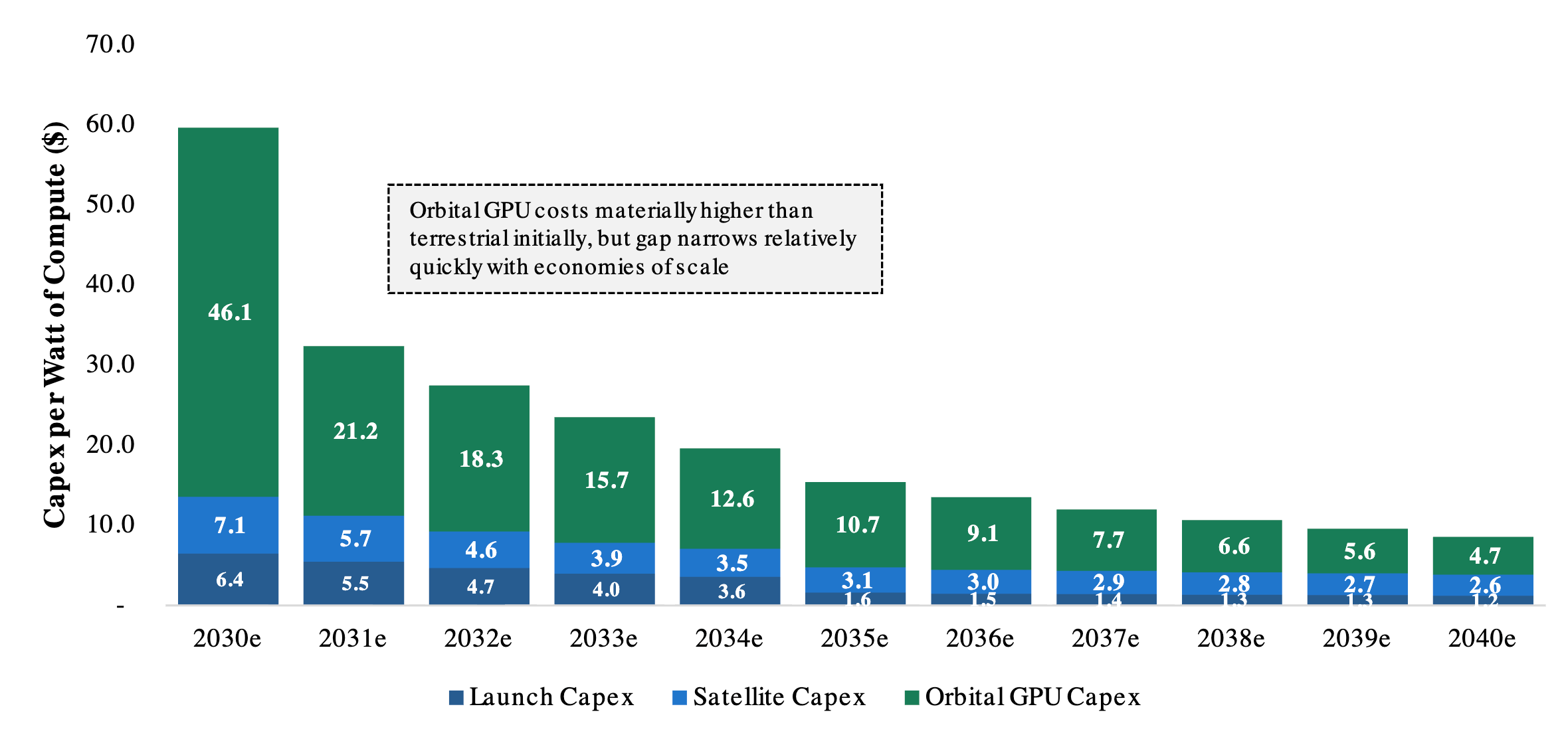
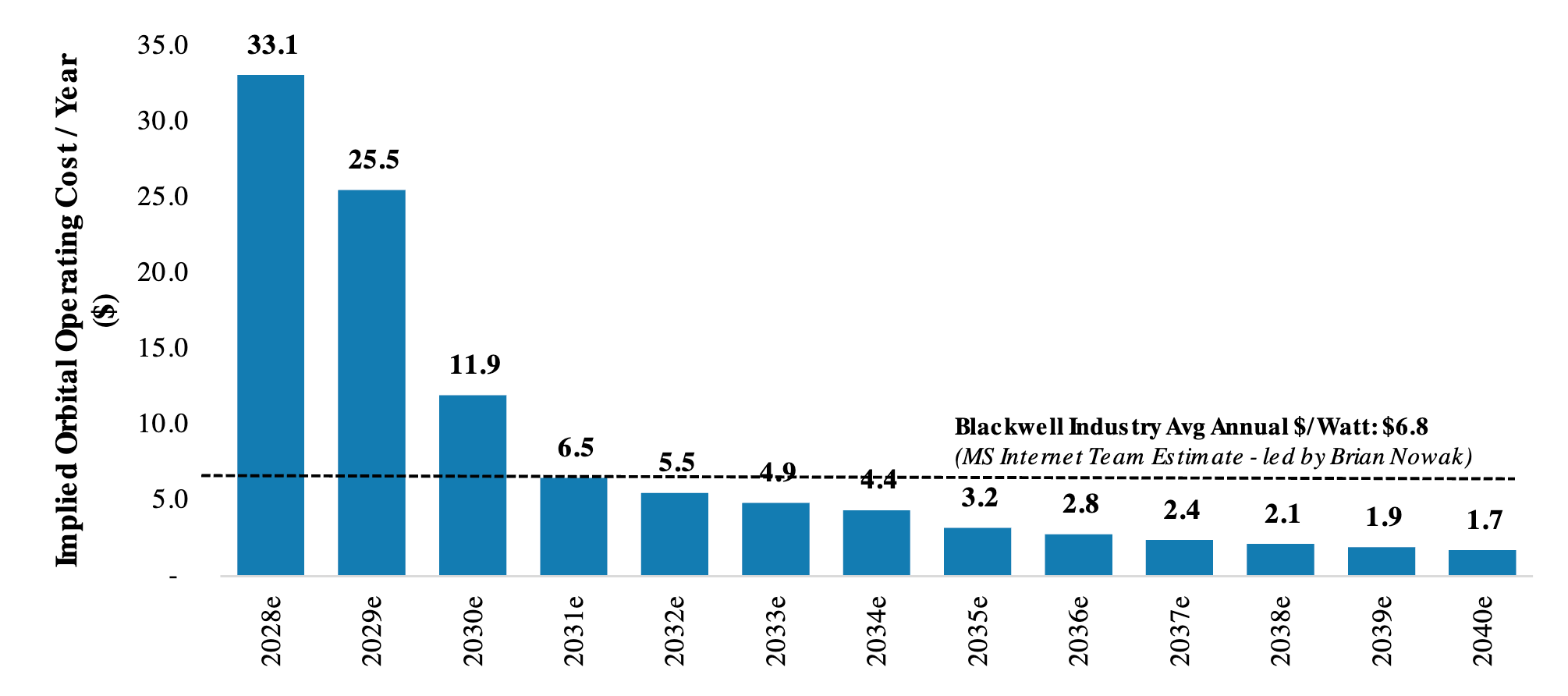
The cost structure of orbital compute breaks down into launch capex, satellite hardware capex and compute payload capex. Each of those is trending downwards, with estimates that orbital compute capex/W falls from US$166/W in 2028 and US$60/W in 2030 to US$32/W in 2031, US$15/W in 2035 and US$9/W by 2040. By 2031, a five-year useful life nets out at $6.5/W/year, comparable to the current rate of Blackwells on earth.
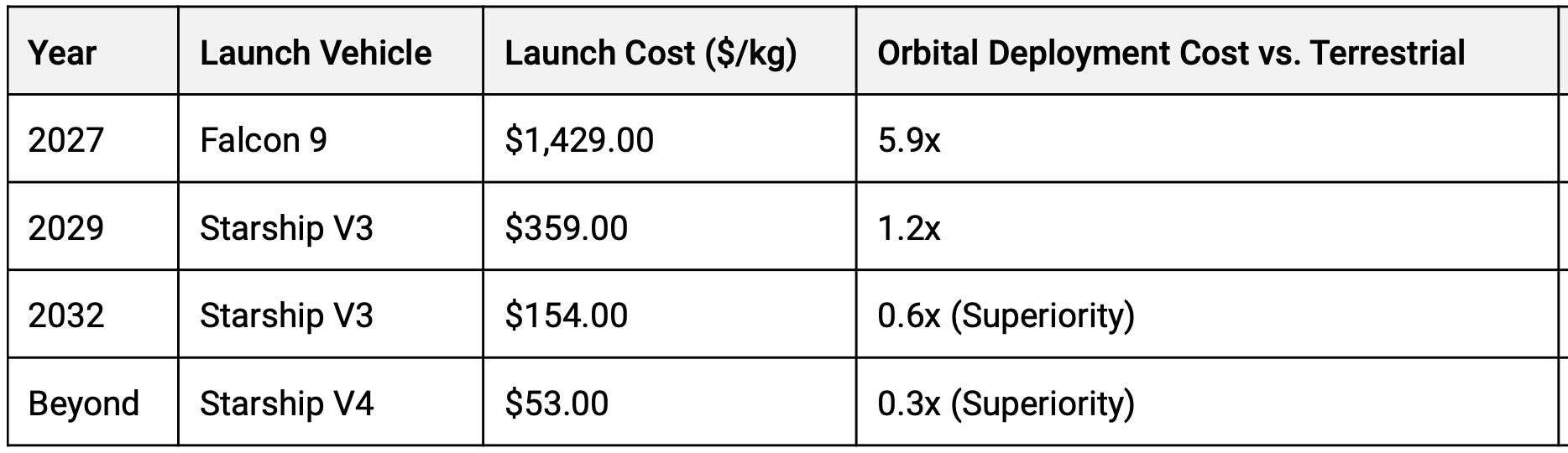
But time-to-power may be the more decisive argument.
Space provides a scalable power envelope that bypasses grid interconnection queues, which currently stretch for years in the US and even longer in Europe. This is compounded by gas turbine availability, transformer lead times, and skilled labour shortages.
Launch cadence remains the unknown. Estimates for Starship launch cadence in the 2030s range widely, as do estimates for the amount of power and compute in orbit.
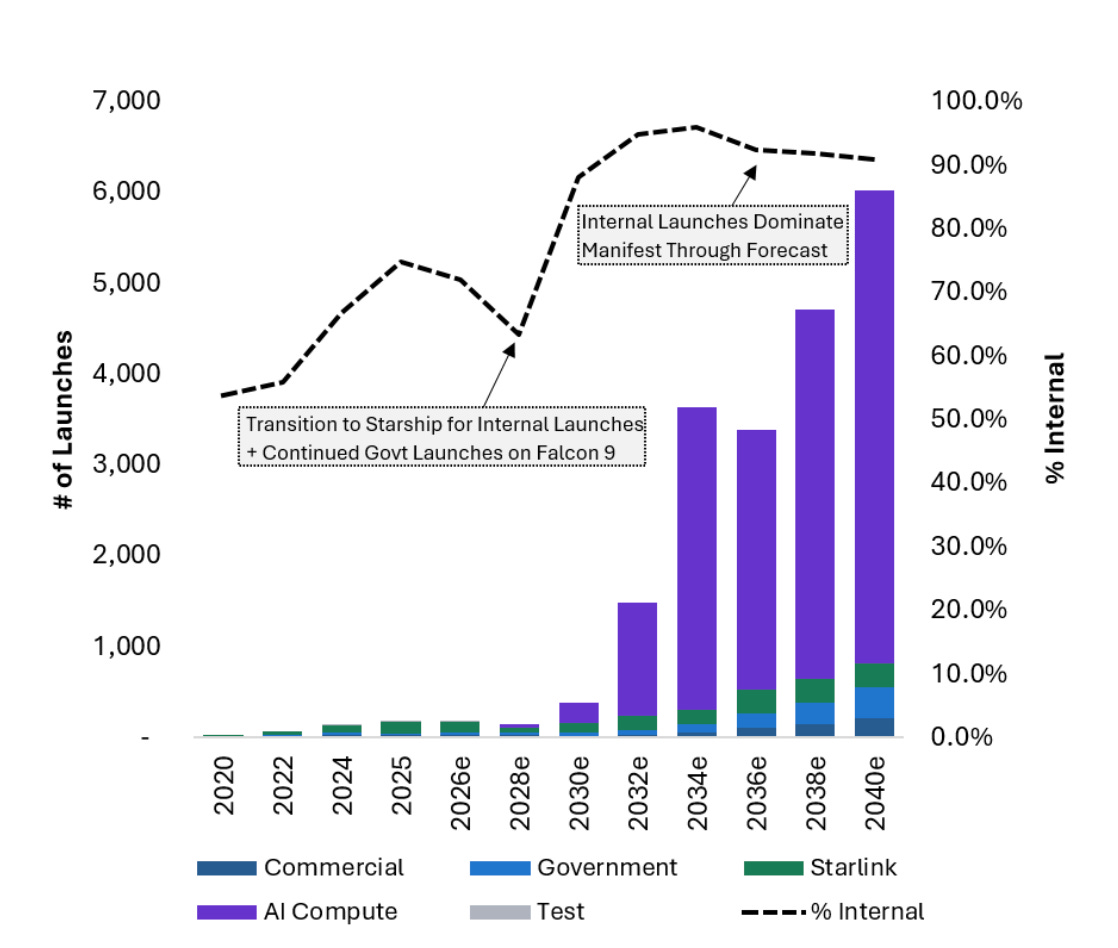
Beyond cost and time-to-power, what workloads will go into orbit?
The bull case would see training remain on terrestrial compute whilst inference moves to orbit.
As it happens, the biggest inference market, agents, may well suit orbital compute the most.
The other interesting angle is space: slower chips actually make space data centers more viable for a number of reasons.
First, if memory can be offloaded, chips can be made much simpler and run much cooler.
Second, older nodes, by virtue of being physically larger, will better withstand space radiation.
Third, older nodes require less power, which means there will be less heat to dissipate via radiation.
Fourth, not being on the bleeding edge will mean higher reliability, an important consideration given that satellites won’t be repairable.
Thanks for the friday morning read - thoughtful piece! :)